Sunday, May 10, 2009

Law & Life, Remembering 'The Message'

Law & Life Remembering "the Messagee"
Remembering 'The Message'
The director of The Message, Moustapha Akkad, was killed in a terrorist bomb attack at a five-star hotel in Amman, Jordan.

In 2005 they finally got him. The director of The Message, Moustapha Akkad, was killed in a terrorist bomb attack at a five-star hotel in Amman, Jordan. It was a horrendous coincidence (poetic to the terrorists) that Moustapha was among the many 'heretics' and 'infidels' they randomly targeted. What's more, Moustapha's 34-year-old daughter too lost her life.

Though no Salman Rushdie, Moustapha had been a much-hated figure among many sections of puritan Muslims ever since he went ahead and shot a big-budgeted, Hollywood film on the life of Prophet Muhammad (Pbuh) in 1976. Incidentally, though the film was poorly received at the American box-office, over the years it became a massive cult classic among a number of more liberal-minded Muslims, some of whom actually started to use it as part of their efforts to reform the commonly perceived face of modern Islam, more so the political Islam of the likes of Abul Ala Maududi, Syed Qutb and their followers.

Moustapha's main goal was also to make a film on the Prophet of Islam for a western audience who only saw him either through the eyes of Christian evangelists or the secular media. For this, Moustapha also managed to sign up the services of veteran Hollywood actor, Anthony Quinn, who plays the role of Hamza.

While trying to raise funds, Moustapha faced stiff resistance from Hollywood in making a film about the origins of Islam. Even though the reasons behind this were fears of monitory loss, the fact that with various (albeit secular) Palestinian guerrilla units being aggressively active in the 1970s (in collaboration with various Left-wing European groups), in attacking numerous western and Israeli economic and political interests, it cannot be dismissed that many in Hollywood also saw the making of this film as a way to counter the western media's take on Muslims in this regard.

Moustapha had to go outside the United States to raise the production money for the film. However, many Muslim governments, fearful of offending the large conservative sections of their own Muslim populations, were hesitant in supporting Moustapha. Shooting finally began in Morocco in early '76 where a huge replica of the Kaaba was built. It is said that just then King Faisal of Saudi Arabia managed to convince Morocco's King Hassan that the 'Makkah' built for the movie might draw pilgrims away from the real holy city and start a new cult of sorts. This saw the Moroccan government kicking Moustapha off his own set, and out of Morocco. Word reached Libya's Colonel Qadhafi, then at the height of his defiantly anti-West and revolutionary "Green Book" phase, and Moustapha was invited to Libya where much of the film was completed.

Unfortunately the completed film failed to get a release in a majority of Muslim countries. Even in the United States some cinemas received threatening telephone calls from those who thought that the film offended Islam by portraying the Prophet in a physical way. The truth however was that the Prophet was never shown on screen. But this was not the only problem.

There were Islamic scholars and historians who criticised the film for basing its story on traditions of a 'Sunni version of Islamic history,' and ignoring contributions made in this respect by other schools of thought in Islam. These also included scholars and historians who claim that much of what is thought of as Islamic History is basically derived from traditions and writings by historians and ulema serving the political interests of the Abbasid caliphs. They claim that the primary sources of Islamic history are rare and hard to find between the Prophet's death in 632 AD and 750 AD, when the first known biography of the prophet appeared — almost a hundred years after his passing.

On the fundamentalist front, on March 9, 1977, a group of Black Muslims, led by Hamas Abdul Khaalis, seized several buildings and took 134 hostages in the District of Columbia (Washington). While their actions were related to a sectarian dispute within the Black Muslim community in the US, one of their demands was to prevent the release of The Message.

Panned by western critics for pretending to be another Lawrence of Arabia, the film was kept at arm's length by most Muslim countries, especially those that came under the 'American camp' (during the Cold War). In Pakistan, though the Z. A. Bhutto regime had planned to allow the showing of the film in 1976, it remained banned throughout Ziaul Haq's dictatorship in the 1980s. Zia's hostility towards radical Muslim leaders such as Col Qadhafi was no secret; he had also been involved as a hired Pakistan army man who led the Jordanian government's armed onslaught against PLO camps in Jordan in 1970.

Thus, a film that was seen by conservative western political observers as an attempt by Libya to propagate the legitimacy of Qadhafi's and the PLO's struggle against the state of Israel and the United States, was a big 'no, no' for those using increasingly conservative, militant and puritanical strains of Islam to recruit men for the so-called Mujahideen movement in Afghanistan — a strain the film supposedly was opposed to.

Some 30 years later after it was first released, The Message finally arrived in Pakistan and was shown repeatedly on one of Pakistan's independent TV channels. This time however there were no cries of blasphemy. The film's original purpose remained intact: Not only to show 'Islam's true basics and face,' to the West but also to a whole generation of Muslims who, for the preceding three decades, had been indoctrinated with a rather violent and intolerant strain of the faith; the sort various Islamic governments had originally propagated, but were now trying to distance themselves from, post-9/11.

Much as the critics of the former general-president will have you believe, it must be acknowledged that Musharraf's enlightened moderation, which liberalised the electronic media in Pakistan to new heights, brought about the sea change that took place under his reign in the social, cultural sphere. It's ironical how the so-called liberal, elected governments in Pakistan have kowtowed to conservative elements, while an autocrat was able to actually roll back that conservatism.

Link to Article: http://www.dawn.com/wps/wcm/connect/dawn-content-library/dawn/the-newspaper/columnists/16-nadeem-f-paracha-remembering-the-message-09

Thursday, May 7, 2009

Zardari Accused Saudis For Benazir's Assassination?

May 7, 2009 . 96 Comments
Zardari - King AbdullahIn reference to Dr. Shahid Masood's recent column in Daily Jang, Asif Ali Zardari has pointed the involvement of a Muslim country in murder of his late wife and ex-Prime Minister Benazir Bhutto. Has Zardari accused Saudi Arabia in involvement of Benazir's Assassination? Is this the reason that Zardari has been insisting for UN investigation? In the same column, Dr. Shahid Masood adds that the Americans shared this accusation with that country, and relations between Pakistan and that country have been strained since then. This was also reflected in a muted response by Saudis in Tokyo Conference of "Friends of Pakistan". This perception was further strengthened due to Zardari's inclination towards Iranians through direct and indirect contacts. Rehman Malik, who is responsible for interior affairs, went on special visit to Iran that was observed with suspicion as in obvious it was out of his Ministery's domain. This visit was followed by Zardari himself, which might have raised some reservations from Saudis. Link to Dr. Shahid Masood's Column

Wednesday, May 6, 2009

Saudis angered by Europe visa delays

RIYADH: Saudi Arabia has accused France, Germany and Italy of discrimination over what it said were unreasonable delays for its nationals to secure visas to visit several European countries. Saudi applicants are forced to submit more documentation and wait much longer than citizens of neighboring countries for Europe's Schengen visa, the foreign ministry said. The visa allows visitors to travel freely through 15 countries with a visa from a single embassy. Articles in several newspapers in the past three weeks have accused especially the French embassy in Riyadh of mistreating Saudi applicants, with some calling for a boycott of France and its businesses. "The visas take longer than it should be ... We want to be treated as the other Gulf countries are," foreign ministry spokesman Osama Nugali said. "The Kuwaitis don't have to wait, the Omanis don't, so why the Saudis?" asked Al-Hayat columnist Dawood Al-Shirian, who said many well-placed Saudi businessmen a nd officials have voiced their frustration. Shirian cited excessive demands made on Saudi applicants for documents like return tickets, bank statements and insurance, and waits of more than three weeks. "These are not poor people who will stay in Europe for work," he said. "These are people who have businesses and houses there. People who go stay in a five-star hotel, people who spend thousands of euros, people who go to Germany for medical reasons. European diplomats acknowledge it is more time-consuming to get a Schengen visa in Saudi Arabia than in nearby countries. But they trace that to higher security precautions in the wake of the 9/11 terror attacks in which most of the attackers were Saudi nationals, and to the 2003-2005 Al-Qaeda campaign of bombings and murders inside Saudi Arabia itself. French ambassador Bertrand Besancenot said applicants' names have to be screened by all the countries which the traveller plans to visit. "The process is naturally longer because you have to have the green light from all the Schengen countries," he said. But he added that Europeans wanting to visit Saudi Arabia also undergo lengthy waits for visas, unlike nearby Gulf countries which offer them visas on arrival at the airport. "The Schengen countries have a lot of things to complain about," he said. Saudi ire is focused on the French, German and Italian embassies, which issue the bulk of Schengen visas, while Britain is outside the Schengen zone and not involved. He said the embassy was planning to outsource to a private firm the collection of visa applications and documents to ease the difficulties. The visa problems could also be eased with some reciprocity from Saudi Arabia on its visa requirements, the ambassador said, adding that the French issue about 70,000 visas a year in the kingdom. - AFP

Lawer wins right to sue

Ex-City lawyer wins right to sue for £5m over Catholic school abuse

Patrick Raggett makes a statement to the press outside the Royal Courts of Justice in central London

(Johnny Green/PA)

Patrick Raggett

The Roman Catholic Church in Britain could face a surge of US-style compensation claims over child abuse after a former City lawyer yesterday won the right to claim £5 million in damages. Patrick Raggett, 50, claims that his life was ruined because of years of insidious abuse by Father Michael Spencer, a teacher at the Jesuit-run Preston Catholic College in Lancashire. Child abuse has cost the Roman Catholic Church in the US more than $2.6 billion, with $436 million paid out last year alone. Until now the Church and religious orders in Britain have escaped such claims, many cases being settled out of court for a few thousand pounds. Mr Raggett told the High Court that, while he was naked, the priest measured him "to chart his growth", filmed him performing exercises, photographed him and touched him inappropriately. He said that it was many years before he connected his experiences at school with years of underachievement at work, a failed marriage and binge drinking. But a breakdown in 2005 propelled him into therapy, where he made the connection between his childhood and his adult problems. The college closed in 1978 and the governors deny liability, arguing that even if there were abuse the case should not proceed because it is outside the legal time limit. Spencer died nine years ago, aged 76. Mrs Justice Swift ruled that the case could go ahead to a full trial. She said she accepted Mr Raggett's evidence that Spencer had subjected him to sexual assault and other forms of abuse on many occasions. He was sometimes abused several times a week over about four years until he was in his fifth year at the college. After the hearing Mr Raggett said: "I am very pleased at the outcome of the trial and would like to thank my family, my legal team and everyone else who supported me throughout, especially my courageous fellow witnesses." Mr Raggett, who now runs his own business consultancy in Fulham, West London, added: "The most important aspect of this trial is that the people who allowed this to happen — and who were quite happy to see it swept under the carpet — have been held responsible at last. "For all the warm words from the Jesuit order about co-operating in this case, the reality is they fought it tooth and nail without regard for my feelings. "There is a large gap between what they preach and the way they give no quarter even when, as here, both experts agreed sexual abuse had occurred. "I want to urge others who are being or who were similarly mistreated to come forward. The Jesuit order, the Catholic Church generally, is still not accepting legal and moral responsibility for the dark virus of abuse in the way it should." During the hearing the judge ordered the respondent to pay £200,000 on account of the claimant's costs, which are estimated to be about £470,000. Mr Raggett's counsel, Robert Seabrook, QC, said that Spencer, who taught French and coached football, used his obsession with sport and photography to augment his deviant tendencies. Mr Raggett's school friends were well aware of Spencer's propensities, as he would insist on the football team not wearing underwear and would join them in the showers, occasionally washing them. Mr Seabrook said psychiatrists considered that Mr Raggett, who attended the school between 1969 and 1976, exhibited many symptoms typically seen in survivors of child abuse — the effects of which, although profound, were not at first obvious. In his final year at school, Mr Raggett began to gamble, getting into debt, and went on to underperform at university. He had difficulty forming intimate relationships, drank excessively and took drugs socially. He qualified as a solicitor, but jobs with a number of well-known City firms, including one as a salaried partner in Birmingham and one in Hong Kong, ended with dismissal or rejection for rash or unreliable conduct. His breakdown, in April 2005, occurred after he got into a theological discussion with a priest and the "dam burst" as he suddenly could not stop sobbing. Mr Seabrook said: "At no time before that date did he attribute his disabilities to Father Michael Spencer's really outrageous and disreputable behaviour and there was no reason why he should — this was not a violent or painful rape or assault." A spokesman for the Jesuits said: "The Society of Jesus accepts with deep sorrow the judgment given. At this stage, the society fully reserves its position in relation to any potential appeal against the judgment. The Society of Jesus abhors the abusive behaviour which the judge finds that Father Michael Spencer committed against Mr Raggett in the 1970s. The society further regrets any damage which this behaviour may have done to Mr Raggett."

Monday, May 4, 2009

LAW:

How a suit is instituted?

Institution of Suits: Every suit shall be instituted by presenting a plaint to the court or such officer

as it appoints in this behalf.

Parties of a suit are Plaintiff or Applicant and Defendant or Respondent.

Every plaint shall contain the following particulars:

a) the name of the Court in which the suit is brought;

b) the name, description and place of residence of the plaintiff;

c) the name, description and place of residence of the defendant, so far as they can be ascertained;

d) where the plaintiff or the defendant is minor or a person of unsound mind, a statement to that effect;

e) the facts constituting the cause of action and when it arose;

f) the fact showing that the Court has jurisdiction;

g) the relief which the plaintiff claims;

h) where the plaintiff has allowed a set off or relinquished a portion of his claim, the amount so allowed or relinquished; an

i) a statement of the value of the subject matter of the suit for the purpose of jurisdiction and of court fees so far as the case admits.

The Court shall cause the particulars of every suit to be entered in a book to be kept for the purpose and called the register of civil suits. Such entries shall be numbered in every year according to the order in which the plaints are admitted.

Order V of Civil Procedure Code provides that: when a suit has been duly instituted a summons may be issued to the defendant to appear and answer the claim on a day to be therein specified, provided that no such summons shall be issued when the defendant has appeared at the presentation of the plaint and admitted the plaintiff's claim.

The Judge or such officer shall sign every such summons as he appoints, and shall be sealed with the seal of the court.

Every summons shall be accompanied by the copy of the plaint or, if so permitted by a concise statement.

Order 2 of CPC provides that:

1. Every suit shall include the whole of the claim, which the plaintiff is entitled to make in respect of the cause of action, but a plaintiff may relinquish any portion of his claim in order to bring the suit within the jurisdiction of any Court.

2. Where a plaintiff omits to sue in respect of, or intentionally relinquishes, any portion of his claim he shall not afterwards sue in respect of the portion so omitted or relinquished.

3. A person entitled to more than one relief in respect of the same cause of action may sue for all or any of such reliefs, but if he omits, except with the league of the Court, to sue for all such reliefs he shall not afterwards sue for any relief so omitted.

LAW (civil case/suit)

How a suit is instituted?

Institution of Suits: Every suit shall be instituted by presenting a plaint to the court or such officer as it appoints in this behalf.

Parties of a suit are Plaintiff or Applicant and Defendant or Respondent

Every plaint shall contain the following particulars:

a) the name of the Court in which the suit is brought;

b) the name, description and place of residence of the plaintiff;

c) the name, description and place of residence of the defendant, so far as they can be ascertained;

d) where the plaintiff or the defendant is minor or a person of unsound mind, a statement to that effect;

e) the facts constituting the cause of action and when it arose;

f) the fact showing that the Court has jurisdiction;

g) the relief which the plaintiff claims;

h) where the plaintiff has allowed a set off or relinquished a portion of his claim, the amount so allowed or relinquished; and

i) a statement of the value of the subject matter of the suit for the purpose of jurisdiction and of court fees so far as the case admits.

The Court shall cause the particulars of every suit to be entered in a book to be kept for the purpose and called the register of civil suits. Such entries shall be numbered in every year according to the order in which the plaints are admitted.

Order V of Civil Procedure Code provides that: when a suit has been duly instituted a summons may be issued to the defendant to appear and answer the claim on a day to be therein specified, provided that no such summons shall be issued when the defendant has appeared at the presentation of the plaint and admitted the plaintiff's claim.

The Judge or such officer shall sign every such summons as he appoints, and shall be sealed with the seal of the court.

Every summons shall be accompanied by the copy of the plaint or, if so permitted by a concise statement.

Order 2 of CPC provides that:

1. Every suit shall include the whole of the claim, which the plaintiff is entitled to make in respect of the cause of action, but a plaintiff may relinquish any portion of his claim in order to bring the suit within the jurisdiction of any Court.

2. Where a plaintiff omits to sue in respect of, or intentionally relinquishes, any portion of his claim he shall not afterwards sue in respect of the portion so omitted or relinquished.

3. A person entitled to more than one relief in respect of the same cause of action may sue for all or any of such reliefs, but if he omits, except with the league of the Court, to sue for all such reliefs he shall not afterwards sue for any relief so omitted.

Friday, May 1, 2009

wher Shiva....


Where Shiva wept...

By Salman Rashid

For those who believe, the pond at Ketas (near the town of Choa Saidan Shah in Chakwal district) was formed by his tears when an inconsolable Shiva wept for his dead wife Sati. And so the pond is sacred to the Hindus. Among the tirathas in the subcontinent, Ketas, because of its connection with Shiva, ranks among the holiest. In this pond the devout tell their children to strew their ashes after they die, here they long to visit in their lifetimes. And when they do come, they carry away bottles of the sacred water – the magical talisman to cure all ills, to banish all worldly cares, to cleanse all impurities of body and soul.
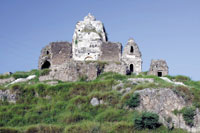
Long before the Shaivites took over this site and raised their temples to Shiva, Ketas was sacred to other religions. We do not know the gods they worshipped here five thousand years ago, but since the spread of Buddhism, Ketas was a great and bustling monastery. In 631 Xuanzang, the Chinese Buddhist master, travelled from Taxila to the town of Singhapura in the midst of mountains.

We now know from the work of great archaeologists that Singhapura is today marked by the village of Dulmial a kilometre and a half to the north of Ketas. Having billeted himself there, the pilgrim visited the monastery and the stupa. He was horrified to see it deserted and without priests. The stupa, so Xuanzang tells us, had been raised by Asoka and was at the time of his visit in ruins.
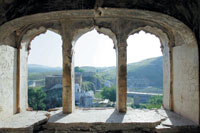
Only a hundred years before the pilgrim's visit, Punjab had been laid waste by the barbaric Huns under Mehr Gul (Mihiragula) and flourishing Buddhism had suffered considerably. This setback to the prevalent religion permitted Hinduism to go on the ascendant. It was then that the Shiva legend replaced earlier Buddhist legends the same way as even older tales were taken over by the Buddhists a thousand years earlier.

In the five hundred years of peace between the overthrow of the Huns and the invasions of the Turks, the Salt Range was adorned with a number of temples by the Hindu Shahya rulers of Punjab and Pukhtunkhwa. At Ketas they raised a complex because there stand three edifices that can clearly be dated to the late 11th century. Built of dark calciferous limestone, they stand apart from the stone and mortar buildings of later times.

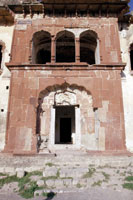
Overlooking the sacred pond is the main Shaivite temple and with it an arc of ancillary buildings. Adjacent to the main temple is the fortress like residence of Sardar Hari Singh Nalwa that he ordered when he governed the Salt Range in the early years of the 19th century.

Following the transmigration of partition, Ketas was laid waste a second time. The temples were desecrated, Nalwa's palace destroyed, its rafters removed to build other homes. In fact, the roofs of most of the buildings were dismantled and the material used elsewhere. In the mid-1980s a half-hearted attempt at restoration was made when a group of pilgrims were to visit from India. This was restricted to white-washing of a couple of buildings and no more.

So aggressive was the neglect that for a time it seemed Ketas had been consigned to doom. But miracles never cease in this land and the Punjab Archaeology Department (PAD) has recently acquired the temple complex from the federal government. Among other things Hari Singh's palace has been fixed with doors that had long ago been wrenched out to adorn other homes and its roofs are being redone.

That is a good beginning because PAD has great plans in store: Ketas, if all goes well, will yet again thrive as a pilgrimage site. It will yet be pulled back from the brink.


Chaudhry Ahmed Khan
  Advocate High Courts
     Cell: 0300 2172379


Windows Live™ SkyDrive™: Get 25 GB of free online storage. Check it out.
Where Shiva wept...

By Salman Rashid

For those who believe, the pond at Ketas (near the town of Choa Saidan Shah in Chakwal district) was formed by his tears when an inconsolable Shiva wept for his dead wife Sati. And so the pond is sacred to the Hindus. Among the tirathas in the subcontinent, Ketas, because of its connection with Shiva, ranks among the holiest. In this pond the devout tell their children to strew their ashes after they die, here they long to visit in their lifetimes. And when they do come, they carry away bottles of the sacred water – the magical talisman to cure all ills, to banish all worldly cares, to cleanse all impurities of body and soul.

Long before the Shaivites took over this site and raised their temples to Shiva, Ketas was sacred to other religions. We do not know the gods they worshipped here five thousand years ago, but since the spread of Buddhism, Ketas was a great and bustling monastery. In 631 Xuanzang, the Chinese Buddhist master, travelled from Taxila to the town of Singhapura in the midst of mountains.

We now know from the work of great archaeologists that Singhapura is today marked by the village of Dulmial a kilometre and a half to the north of Ketas. Having billeted himself there, the pilgrim visited the monastery and the stupa. He was horrified to see it deserted and without priests. The stupa, so Xuanzang tells us, had been raised by Asoka and was at the time of his visit in ruins.

Only a hundred years before the pilgrim's visit, Punjab had been laid waste by the barbaric Huns under Mehr Gul (Mihiragula) and flourishing Buddhism had suffered considerably. This setback to the prevalent religion permitted Hinduism to go on the ascendant. It was then that the Shiva legend replaced earlier Buddhist legends the same way as even older tales were taken over by the Buddhists a thousand years earlier.

In the five hundred years of peace between the overthrow of the Huns and the invasions of the Turks, the Salt Range was adorned with a number of temples by the Hindu Shahya rulers of Punjab and Pukhtunkhwa. At Ketas they raised a complex because there stand three edifices that can clearly be dated to the late 11th century. Built of dark calciferous limestone, they stand apart from the stone and mortar buildings of later times.

Overlooking the sacred pond is the main Shaivite temple and with it an arc of ancillary buildings. Adjacent to the main temple is the fortress like residence of Sardar Hari Singh Nalwa that he ordered when he governed the Salt Range in the early years of the 19th century.

Following the transmigration of partition, Ketas was laid waste a second time. The temples were desecrated, Nalwa's palace destroyed, its rafters removed to build other homes. In fact, the roofs of most of the buildings were dismantled and the material used elsewhere. In the mid-1980s a half-hearted attempt at restoration was made when a group of pilgrims were to visit from India. This was restricted to white-washing of a couple of buildings and no more.

So aggressive was the neglect that for a time it seemed Ketas had been consigned to doom. But miracles never cease in this land and the Punjab Archaeology Department (PAD) has recently acquired the temple complex from the federal government. Among other things Hari Singh's palace has been fixed with doors that had long ago been wrenched out to adorn other homes and its roofs are being redone.

That is a good beginning because PAD has great plans in store: Ketas, if all goes well, will yet again thrive as a pilgrimage site. It will yet be pulled back from the brink.


Chaudhry Ahmed Khan
  Advocate High Courts
     Cell: 0300 2172379


Hotmail® has a new way to see what's up with your friends. Check it out.